2026-10-06 · Kalei Akana
How Honolulu Humidity Affects AC Performance
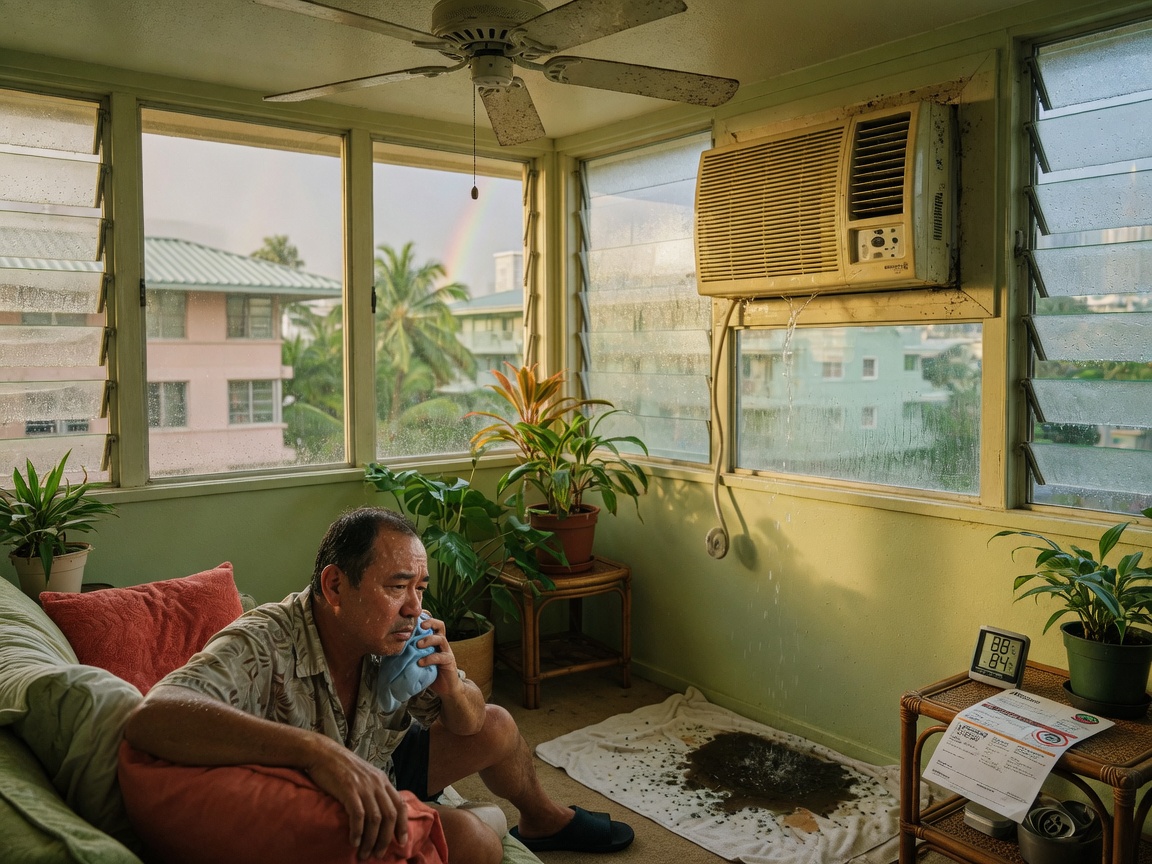
In Honolulu County, where relative humidity commonly sits between 65% and 85% year-round, AC systems must remove far more moisture than sensible heat alone, extending run times and cutting efficiency compared with drier mainland climates.
Humidity Patterns Across Honolulu Neighborhoods
Honolulu experiences steady trade winds that carry moisture from the ocean inland, keeping humidity elevated even during the dry season. In Waikiki and Kakaako, high-rises and older concrete buildings trap this moisture, so central AC units cycle 30-40% longer than in windier spots like Alewa Heights. Homes in Manoa and Nuuanu sit in valleys where fog lingers, pushing indoor humidity higher and forcing evaporators to work harder at pulling water from the air. The result shows up in higher utility bills and earlier wear on compressors. Residents in Kalihi and Palolo often notice the same pattern in single-family homes built before 1980, where original ductwork lacks proper insulation against constant dampness. These local conditions mean technicians must size equipment and set airflow specifically for moisture removal rather than just temperature drop.
How Excess Moisture Reduces Cooling Output
When humidity stays high, the evaporator coil spends more time in latent-heat removal mode, which lowers the system's sensible cooling capacity. In practice, an AC sized for 95°F dry air may deliver only 70-75% of its rated BTUs once indoor relative humidity climbs past 75%. This forces the compressor to run longer in neighborhoods such as Downtown Honolulu and Kaimuki, where afternoon heat combines with ocean moisture. Over time the extra runtime raises head pressure and discharge temperatures, accelerating wear on valves and capacitors. Homeowners in Pearl City and Kailua report similar effects when windows stay closed against trade-wind rain. Proper airflow across the coil becomes critical; even a 10% reduction from dirty filters compounds the moisture load and drops efficiency further.
Effects on Components and System Longevity
Constant moisture exposure accelerates corrosion on outdoor coils, especially in coastal blocks near Waikiki Beach and Diamond Head. Indoor drain pans fill faster, increasing the chance of overflow and ceiling damage in older Manoa homes. Electrical components inside the air handler face higher humidity, raising the risk of short circuits during the wetter months. In Kakaako's newer high-rises, variable-speed systems handle the load better, yet still require more frequent coil cleaning than units in drier Aiea neighborhoods. Technicians routinely see evaporator coils in Kalihi homes needing acid washes every 18-24 months instead of the 36-month interval common elsewhere. These realities shorten average equipment life unless maintenance intervals are adjusted for local conditions.
Practical Steps for Honolulu Homeowners
Schedule AC Maintenance before the dry season ends so coils and drains are clean when humidity rises again. Set the thermostat fan to auto rather than on to avoid re-evaporating moisture already removed. In homes where indoor humidity stays above 60% even with the AC running, adding a whole-home dehumidifier through Dehumidifier Installation can reduce AC runtime by 20-25%. Check and replace filters more often during periods of heavy trade-wind moisture, following guidance in the article When to Replace AC Filters During Hawaii's Wet Season. For properties near salt air, review additional protection steps in Protecting AC Units from Salt Air in Coastal Honolulu. These targeted actions keep systems performing closer to design specs despite Honolulu's persistent humidity.
When Performance Issues Signal the Need for Repair or Replacement
If an AC runs continuously yet fails to drop indoor humidity below 55%, the system likely needs AC Repair to restore proper refrigerant charge and airflow. In older stock around Nuuanu and Palolo, units past 12 years often cannot keep up with current humidity loads once compressors lose capacity. Homeowners in Waikiki and Kakaako facing repeated drain clogs or high humidity complaints should consider AC Installation with a unit sized for both sensible and latent loads. Upgrading to a system with variable-speed blowers and enhanced dehumidification modes typically restores comfort without oversized equipment that short-cycles in milder trade-wind weather.